
How to Extend FMLA Leave: Forms, Deadlines and Next Steps



Meet the Author

Can you extend FMLA leave
You can request more time for a qualifying medical need if you still have FMLA leave available. Start by contacting HR or your leave administrator, then arrange a clinical reassessment and any requested certification update. A new doctor's note does not create additional FMLA entitlement after your available leave is exhausted.
“Extend my FMLA” can mean three different things. Identify which applies before booking an appointment or requesting a replacement form:
- Your approved return date is too soon. You may need a longer certified absence within your remaining leave balance.
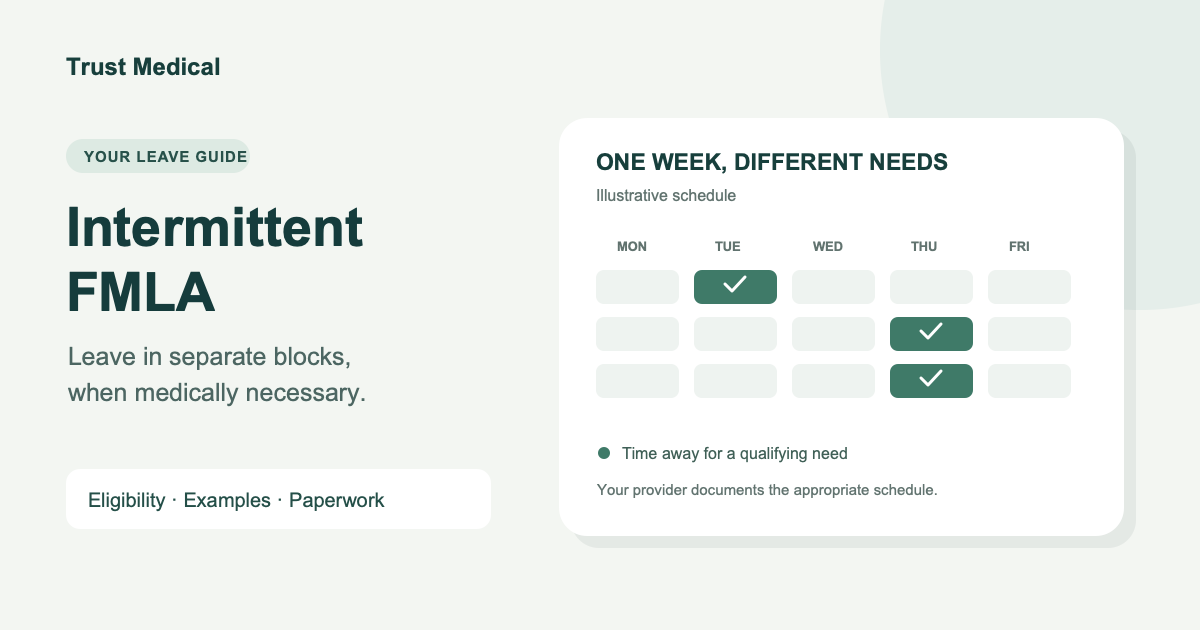
- Your intermittent leave pattern changed. You may need updated estimates of episode frequency, duration or treatment visits.
- You have used your available FMLA leave. Ask about other leave rights or accommodations; changing certification dates alone will not solve this.
This guide addresses leave for your own medical condition. Federal FMLA generally provides eligible employees up to 12 workweeks in the employer's defined leave year for this reason. Other protections may apply. See the DOL explanation of the FMLA leave year.

Request an extension before your scheduled return
Notify your leave administrator as soon as you learn you may need more time. Do not wait for a completed form to tell HR that your return date may change. Continue following the employer's notice and call-in procedures while the request is being reviewed.
- Confirm your remaining balance. Ask for the leave already counted, available workweeks or hours, and the leave-year method. Also confirm the last date currently approved.
- Ask what update is needed. Get the required form, submission method and deadline. Ask whether HR is requesting a correction, recertification, or a new certification for a new leave year.
- Arrange a clinical reassessment. Explain what changed, which essential duties remain affected, and what treatment or recovery milestone supports the proposed timeline.
- Submit and check receipt. Save the updated certification and confirmation. Ask for the revised leave determination and return date in writing.
Message you can adapt: “My current approved return date is [date]. My medical condition may require additional leave, and I am arranging reassessment. Please confirm my remaining FMLA balance, the documents and deadline for an extension, and how I should report absences while the request is pending.” This is a notification template, not evidence of medical necessity or approval.
Under federal recertification rules, a request for an extension can allow an employer to request recertification sooner than otherwise permitted. Employees generally have at least 15 calendar days to respond, unless that is impracticable despite diligent, good-faith efforts.

Bring the evidence needed to update your certification
A useful extension appointment starts with the current paperwork and the reason it no longer reflects your situation. Bring:
- The existing certification and approval notice, including the current end date.
- The administrator's exact update request and deadline.
- Your job duties and usual work schedule.
- Relevant treatment records, changes since the last evaluation, and planned follow-up.
- For intermittent leave, a dated log of actual absences and how long each lasted.
The provider assesses whether more leave is medically necessary and what duration or pattern the evidence supports. A requested number of weeks or days is not automatically the appropriate medical estimate.
Correction or changed medical need
If a form accidentally says June 12 when the provider intended June 21, ask the original issuer to correct the error. If June 12 was the intended date but your recovery has changed, explain that change and arrange reassessment. Those are different requests; do not edit the signed date yourself.
Similarly, if intermittent episodes now last a full shift instead of two hours, provide your actual absence log and contact HR and your clinician. Do not assume extra absences are automatically covered under the old estimate.
If HR identifies an incomplete or insufficient certification, request the written list of deficiencies and send it to the provider. Federal rules generally require at least seven calendar days to cure the deficiency, with an exception where doing so is impracticable despite diligent, good-faith efforts. Contact HR promptly if you cannot meet the deadline and keep records of your efforts. See 29 CFR 825.305.

What happens when your FMLA leave runs out
More medical documentation does not extend the federal 12-workweek entitlement for your own condition. Ask HR whether another law, employer leave policy or disability accommodation applies.
Under the ADA, a covered employer may need to consider additional unpaid leave as a reasonable accommodation for a qualifying disability, unless it would cause undue hardship. It is an individualized process, not an automatic extra block of FMLA. Explain the additional time needed and the expected return or reassessment date. The EEOC's leave guidance describes this process.
When does FMLA reset
It depends on the employer's leave-year method. Employers may use a calendar year, another fixed year, a year measured forward from first use, or a rolling year measured backward from each absence. Do not assume January 1 restores your balance.
With a rolling look-back method, time can become available as earlier leave falls outside the preceding 12 months. Ask HR to calculate the balance for the dates you actually need. A new leave year can also require a new eligibility assessment and certification. The DOL leave-year guide explains the methods.
Will disability pay continue
That is a separate decision under your disability plan. Ask the benefits administrator for the currently approved payment end date, medical update requirements, and any maximum benefit duration. An FMLA extension does not automatically extend disability payments, and continued payments do not establish job protection. Check your plan's claim instructions.

Get the right help for an extension
Start with the clinician who knows the condition and completed the original certification when possible. They can compare your current needs with the earlier evaluation. If that provider is unavailable, ask HR what documentation it needs and bring your records to another qualified provider for an independent assessment. Prior approval does not guarantee a new provider will support the same leave.
Where Trust Medical fits
For your own medical condition, Trust Medical can evaluate whether updated medical leave documentation is clinically appropriate. Bring your existing certification, the administrator's request, relevant records and the deadline. The provider needs enough information to make an independent clinical judgment. Trust Medical cannot add to your statutory FMLA balance, make your employer's leave decision, or guarantee disability benefits. Its evaluation does not replace ongoing treatment.
Start a medical leave evaluation. If your issue is an incomplete form rather than a change in medical need, review our FMLA paperwork guide first.
Before considering the request complete, confirm that the administrator received the document, resolved any missing information, and told you the approved dates and reporting requirements. Save that response with your records.
Need medical leave documentation?





Still have questions? Find answers here:
250K+

Money Back Guarantee!
Related posts